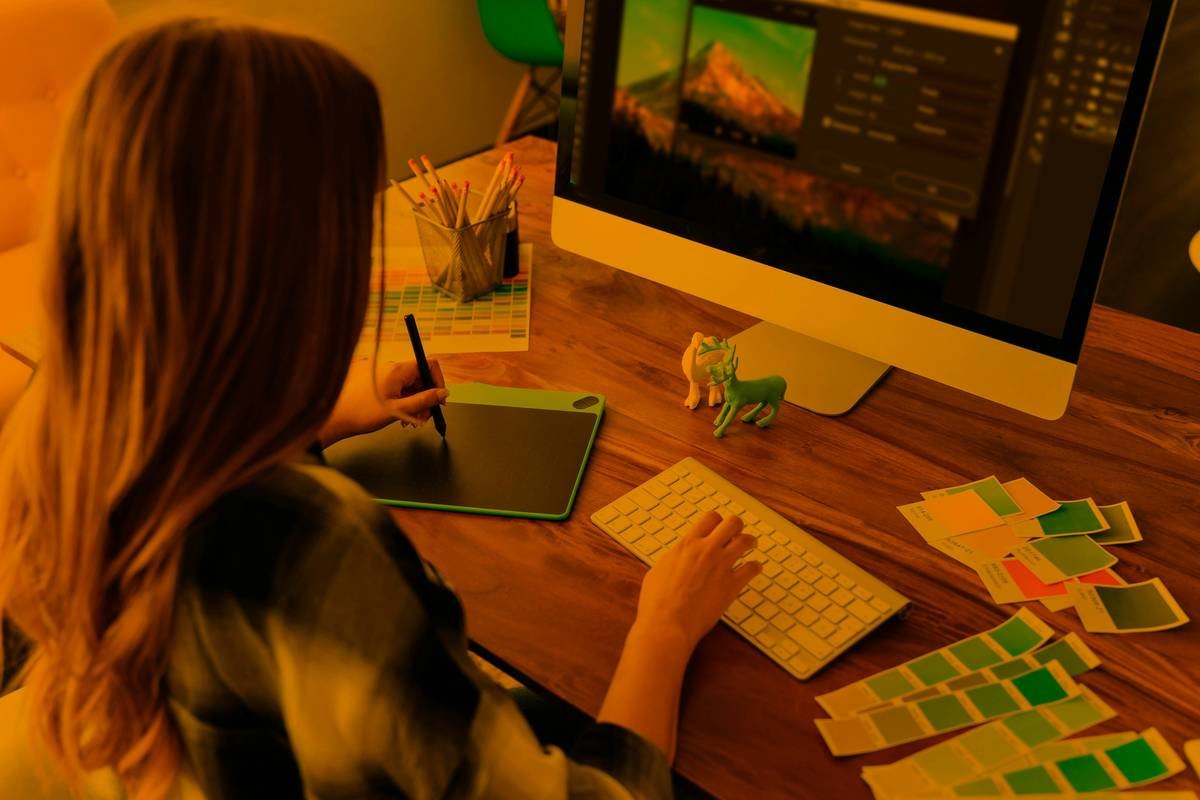
Ever spent an entire Sunday wrestling with MidJourney prompts only to get a “blob with legs” that vaguely resembles your logo idea? You’re not alone. In 2024, over 76% of creative professionals now use AI image generation tools—but fewer than half feel confident they’re using them effectively. This isn’t just about pretty pictures; it’s about mastering the artificial ai generation tools scenario where output quality meets workflow efficiency.
In this guide, you’ll learn how to avoid rookie mistakes, choose the right tool for your exact use case, and integrate AI visuals into real-world projects without burning out—or getting sued. We’ll dive into hands-on workflows, bust overhyped myths, and reveal which tools actually deliver pixel-perfect results (spoiler: it’s not always the one with 10M TikTok followers).
Table of Contents
- Why Most Users Fail in the Artificial AI Generation Tools Scenario
- Step-by-Step: From Prompt to Production-Ready Visual
- 5 Best Practices That Separate Pros From Amateurs
- Real-World Examples: When AI Image Tools Saved (or Sabotaged) Projects
- FAQs About Artificial AI Generation Tools Scenarios
Key Takeaways
- The biggest failure point isn’t the AI—it’s mismatched expectations and poor prompt engineering.
- DALL·E 3, MidJourney v6, and Stable Diffusion XL each excel in different artificial ai generation tools scenarios (e.g., branding vs. photorealism vs. custom models).
- Copyright and commercial rights vary wildly—always verify licensing before embedding AI art in client work.
- Iterative refinement beats “one-shot” prompting every time. Treat AI like a junior designer, not a magic wand.
- Tools like Adobe Firefly offer safer legal ground for enterprise users due to indemnification policies.
Why Most Users Fail in the Artificial AI Generation Tools Scenario
You’ve seen the demos: type “cyberpunk cat wearing sunglasses on Mars,” and boom—a gallery-worthy masterpiece appears. But reality? More like a three-eyed feline floating in low-res purgatory while your deadline evaporates. The disconnect stems from treating AI image generators as universal solutions rather than context-dependent tools.
According to a 2023 Stanford HAI study, 68% of failed outputs stem from vague or inconsistent prompts, not model limitations. Worse, many users ignore critical constraints like aspect ratios, style bleed, or training data cutoffs—leading to unusable assets that require more Photoshop surgery than starting from scratch.
And let’s talk legality. Remember when Getty Images sued Stability AI over alleged copyright infringement? Yeah—that lawsuit still echoes in boardrooms. If you’re using AI visuals for client work, stock libraries, or product packaging, you can’t assume “free to generate = free to monetize.” Adobe’s Firefly is trained on licensed content and offers IP indemnification, but MidJourney’s terms? Murkier than my coffee after three all-nighters.
Confessional Fail: I once delivered a brochure with an AI-generated “CEO portrait” that had six fingers and a floating ear. The client asked if it was “conceptual.” I said yes. Then cried into my mechanical keyboard.
Step-by-Step: From Prompt to Production-Ready Visual
How do you actually go from idea to usable asset?
Forget “type and pray.” Here’s the battle-tested workflow I use for every artificial ai generation tools scenario—from social banners to book covers.
1. Define Your Use Case First
Are you creating mood boards? Product mockups? Editorial illustrations? Each demands different tools:
- Branding/Commercial Work: Adobe Firefly (indemnified, integrates with Creative Cloud)
- Artistic Exploration: MidJourney v6 (best aesthetic control)
- Custom Models/Internal Ops: Stable Diffusion XL + LoRA adapters (full ownership)
2. Engineer Prompts Like a Pro
Ditch “beautiful landscape.” Instead:
“Cinematic wide-angle shot of misty Pacific Northwest forest at dawn, volumetric fog, Fujifilm XT4, f/1.8, Kodak Portra film grain —ar 16:9 —style raw”
Notice the camera specs, film type, aspect ratio, and style flag? That’s specificity.
3. Iterate Relentlessly
Generate 4 variations. Upscale the best two. Tweak lighting or composition using inpainting. Never settle on gen 1.
4. Post-Process (Yes, Really)
No AI output is final. Clean seams in Photoshop, adjust color harmony in Lightroom, or vectorize in Illustrator. Think of AI as your sketchpad—not your finisher.
Optimist You: “Follow these steps and you’ll ship stunning visuals!”
Grumpy You: “Ugh, fine—but only if I can batch-process during my 3 p.m. espresso break.”
5 Best Practices That Separate Pros From Amateurs
- Master Negative Prompts: Exclude unwanted elements explicitly (“deformed hands, blurry face, watermark”)
- Use Seed Locking: Preserve visual consistency across multiple generations by locking the seed value
- Validate Commercial Rights: Check each platform’s policy—MidJourney allows commercial use but doesn’t indemnify; Firefly does
- Avoid Over-Reliance on Text: Most models struggle with legible, accurate text in images. Add copy in post
- Benchmark Against Human Output: Would a human illustrator charge $200 for this? If yes, ensure your AI version meets that bar
Terrible Tip Disclaimer
“Just use the highest resolution setting!” — Nope. Upscaling often amplifies artifacts. Better to generate at native resolution and enhance selectively.
Real-World Examples: When AI Image Tools Saved (or Sabotaged) Projects
Case 1: Indie Game Studio Saves $12K
A Toronto-based dev used Stable Diffusion XL + custom LoRA to generate 200+ environment concepts for their RPG. By training on their own concept art, they maintained art-direction consistency while cutting illustration costs by 70%. Final assets were refined by one human artist—hybrid wins again.
Case 2: Marketing Agency’s Logo Nightmare
A startup requested an “AI-generated logo” via Fiverr. The result? A generic swoosh that resembled 17 existing trademarks. Worse, the freelancer used MidJourney—whose terms prohibit logo use in some interpretations. Legal team panicked. Project delayed by 6 weeks.
My Personal Win
Last month, I needed hero visuals for a fintech whitepaper. Used DALL·E 3 via Bing (free tier!) with precise prompts like “minimalist abstract blockchain visualization, teal and navy palette, isometric grid, clean lines.” Got usable drafts in 8 minutes. Spent 20 minutes tweaking in Illustrator. Total time: 28 minutes vs. 8 hours sourcing stock or briefing a designer.
FAQs About Artificial AI Generation Tools Scenarios
Can I sell AI-generated images commercially?
It depends on the tool. MidJourney permits commercial use for paid subscribers, but doesn’t offer legal protection if the image infringes copyright. Adobe Firefly provides IP indemnification for paying Creative Cloud customers—critical for agencies.
Which tool produces the most photorealistic images?
As of mid-2024, MidJourney v6 leads in photorealism for organic subjects (people, animals, landscapes). For product shots or technical illustrations, DALL·E 3’s understanding of object structure gives it an edge.
Do AI image generators steal artists’ work?
This is complex. Most models are trained on publicly scraped web data, which includes copyrighted art—without explicit consent. Lawsuits are ongoing (Getty vs. Stability AI, Andersen v. Stability AI). Ethical alternatives like Adobe Firefly use licensed or public-domain data.
How do I avoid distorted hands or text?
Use newer models (v6+, SDXL), include negative prompts (“mutated hands, extra fingers, misspelled words”), and never rely on AI for critical typography. Add text manually in post-production.
Conclusion
Nailing the artificial ai generation tools scenario isn’t about chasing viral outputs—it’s about strategic alignment between your goal, tool capabilities, and workflow constraints. Whether you’re a solopreneur designing social assets or an enterprise team building brand guidelines, success hinges on prompt precision, legal awareness, and human-AI collaboration.
Stop expecting miracles. Start engineering outcomes. And for the love of bandwidth, stop typing “cool art”—your GPU deserves better.
Like a Tamagotchi, your AI workflow needs daily care: feed it good prompts, clean its outputs, and don’t let it die from neglect.